
Ambani is in good company. The likes of ultra-rich individuals like hedge fund billionaire Ray Dalio and co-founder of Google Sergey Brin have chosen Singapore to establish their family offices. So have British inventor James Dyson, famous for his bladeless fans and hair dryers and vacuum cleaners, and Zhang Yong, founder of China's Haidilao hotpot restaurant chain, reports Lee Kah Whye.

The BSE Mid-Cap index was currently down 1.25%
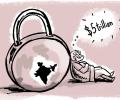
It would be a difficult task for the Indian economy to reach the $5-trillion mark a year before the International Monetary Fund (IMF) projection of 2026-27. Pankaj Chaudhary, minister of state for finance, said in the Rajya Sabha on Tuesday that the government is taking steps to make the country a $5-trillion economy at a date earlier than the IMF's projection. In that context, it would not be difficult to meet the projection in the third quarter of FY27.

However, Icra Rating Principal Economist Aditi Nayar feels that the numbers are a bit too optimistic and need real heavy-lifting by the Centre and the states. "The survey forecasts on real and nominal GDP will require a substantial push from Central and state spending as private sector capacity expansion is anticipated to be intermittent, and sector-specific in the next couple of quarters," she said. Nayar added that private consumption is likely to chart a differentiated recovery across income and age groups. Based on the comments made in the Survey, she expects the Union Budget to incorporate a growth in gross tax revenue of 15-16 per cent.

Market leader Maruti Suzuki sold 51,274 units, down 49.61 per cent from the same month last year. Hyundai Motor sold 21,320 units, a decline of 49.25 per cent and Mahindra & Mahindra sold 8,075 units, down 54.54 per cent.

The revision will do little to help the Congress party-led ruling alliance, which faces an uphill battle in elections due by May amid allegations of economic mismanagement, corruption scams and high inflation.

In 50 days, 60% of the work force was let off in retail, agri, textile and other sectors.

The inflows came higher in March than in February of 2019-20 despite the lockdown for a week, reports Indivjal Dhasmana.

The breadth, indicating strength of the market was strong

More activity in the IT, health care, services sectors; manufacturing firms keeping fingers crossed.

The gains came on expectations that the company will post strong growth given its presence in application to peer services and the fast-growing communication platform as a service segment.

'Markets are factoring in a good show by India Inc in Q2.'

S&P Global Ratings on Wednesday said Indian banks face a systemic risk as the second COVID wave will impair the performance of financial institutions in the April-September period. Stating that economic recovery remains highly vulnerable to setbacks due to COVID, particularly if fresh outbreaks trigger new lockdowns, S&P said the banking sector's weak loans will likely remain elevated at 11-12 per cent of gross loans in the next 12 to 18 months. "The second wave has front-ended weakness in asset quality," said S&P Global Ratings Credit Analyst Deepali Seth Chhabria. "Financial institutions face a strained first half amid weak collections and poor disbursements."

The bullishness in the Indian stock market is likely to continue and the benchmark Sensex will reach 32,500 by December 2015, global brokerage firm Morgan Stanley said.

Flush with liquidity, banks are eager to lend. And, therein lies the problem, warns Tamal Bandyopadhyay.

This was even as the country's economy grew by 7.3%.

The country's largest software company Tata Consultancy Services (TCS) on Wednesday said its net profit increased 8.7 per cent year-on-year to Rs 11,342 crore in the September 2023 quarter. The Tata Group flagship had reported a net profit of Rs 10,431 crore in the year-ago period.
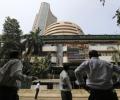
Top gainers in the Sensex pack included IndusInd Bank, ITC, L&T, M&M, PowerGrid, Asian Paints and SBI, ending up to 3.79 per cent higher.

These start-ups include high-growth companies such as Ola, Paytm, Lenskart, UrbanClap and Urban Ladder. Nearly half of these have gone on to raise follow-on funding, a key measure of success for start-ups. A few have become unicorns, the term for start-ups valued at $1 billion or more.

Retail sales of cars are back to January 2018 levels in August 2021. Two-wheeler retail sales are 22 per cent lower, nearly four years down the line.
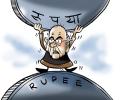
For the first eight months of the current financial year, the figure stood at Rs 7.17 trillion.

'Every time a new tech comes in, there are a set of people who will predict that this will be the end of Indian IT and every time the Indian IT industry and overall technology providers have proven to be resilient.'

'Das is friendly, but he finally does what he does. The quality of engagement is very good.'

Vinay Umarji

It was a year of big gains for equity investors.

The decline bolstered bets that the Federal Reserve will hike interest rates in mid-2015

'We expect the bull run to continue until economic growth continues.'

The Indian stock markets may turn bearish after the US Fed decides to raise interest rates.

The much-awaited soft launch of Reliance Jio's next-generation mobile services has been delayed by another month.

The GST Council, headed by Finance Minister Nirmala Sitharaman and comprising representatives of all states and Union territories, will have its 37th meeting in Goa against the backdrop of economic growth hitting a six-year low of 5 per cent in the first quarter of the current fiscal.

It was the second straight week of gains for the benchmarks.

RBI may hold rates steady as economic parametes are going strong, say experts.

India's economy grew by 1.6 per cent in the fourth quarter of 2020-21, restricting the full-year contraction to 7.3 per cent, official data showed on Monday. The fourth quarter growth was better than the 0.5 per cent expansion in the previous October-December quarter of 2020-21. The gross domestic product (GDP) had expanded by 3 per cent in the corresponding January-March period of 2019-20, according to data released by the National Statistical Office (NSO).

Moody's Investors Service on Thursday said second wave of Covid infections has increased asset risks for Indian banks, but a severe deterioration is unlikely. It said that the second wave of coronavirus infections in India has exacerbated stress among individuals and small businesses that were hit the hardest by the initial outbreak. Still, a number of factors will prevent sharp increases in problem loans, and banks have sufficient buffers to absorb anticipated loan losses.

The low global crude prices have helped narrow the current account deficit to just 0.2 per cent of GDP in the previous January-March quarter.

Industry players said IT hiring was not as strong as it was in 2022. One reason is the high bench IT firms have due to earlier hiring.

Consumers can expect a 5G launch in the country soon. Telecom companies (telcos) say if auctions take place on time - the target is July - they would be able to offer some services in a few cities by the end of this year and a full roll-out from 2023. But the question is: will 5G turn the tables for telcos financially? Will average revenue per user (ARPU) improve? Will mobile consumers upgrade to 5G quickly and pay more? Will the expanded functions that 5G enables drum up sufficient revenues? In simple terms, will telcos make more money?

'This is a race where every technology can be used by the bad guys and good guys.'

In what is amongst the first focused fund in the space, India Media Entertainment Fund (IMEF) is raising Rs 500 crore, which will provide both equity as well as instruments like non-convertible debentures (NCD) to companies in the content, distribution platform and services areas. The private equity fund has appointed a high-profile advisory body which includes ad guru Prahlad Kakkar, managing director of Red Chillies Entertainment and cricket team KKR Sports, actress and entrepreneur Raadhika Sarathkumar, who has starred in Malayalam, Hindi and Kannada films and runs Radaan Mediaworks. It also includes Ramnath Pradeep, former chairman and managing director of Corporation Bank, and Rajesh Gupta, senior partner of law firm SNG Partners.

Indian companies are expecting generous tax incentives from the Union Budget that will help them invest more in building capacities in the coming years. While the productivity-linked incentives (PLIs) are a good start to spur local manufacturing, the government should also take steps to boost consumer demand, which is not showing encouraging signs, say chief executive officers (CEOs) of India Inc. Statistics released by the Reserve Bank of India (RBI) shows that Indian banks had sanctioned loans worth Rs 75,558 crore in 220 new projects - a record low - in the pandemic-hit financial year ending March 2021. This is not showing any signs of a significant pick up in the last nine months of the ongoing financial year.
